
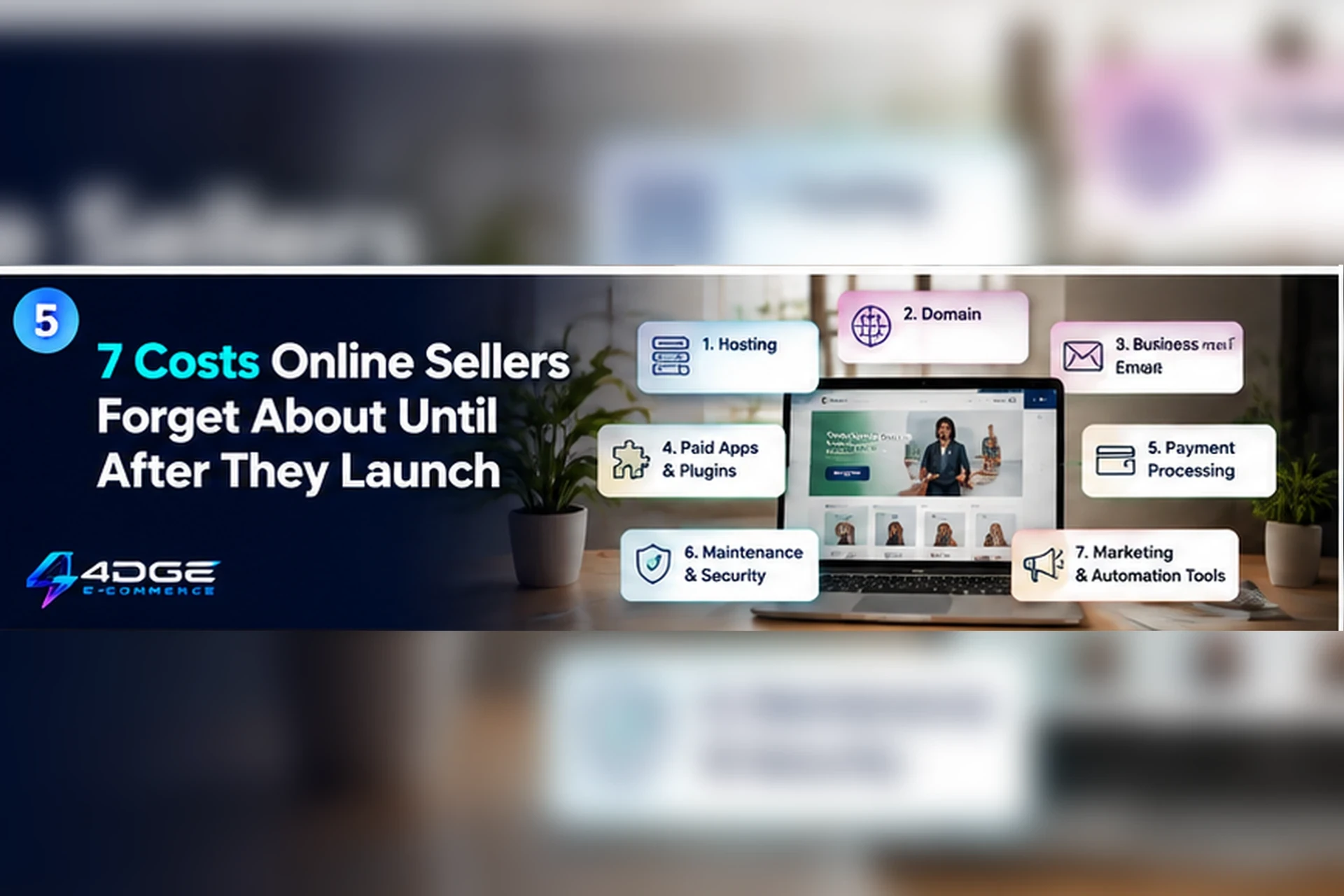
An online store can appear affordable when you count only its monthly platform plan. The actual cost of selling includes other charges and work that can affect cash flow and margins. Some costs are easy to overlook because they arrive as a percentage, renew once a year or grow with order volume.
This checklist is for South African businesses planning an online store or reviewing an existing one. It is not a claim that every seller will pay every item. Use it to find the costs relevant to your own products, customers and fulfilment model.
1. Payment processing
A payment provider may charge for transactions, settlements, refunds, disputes or other services under its current terms. These costs are separate from a platform subion. Compare the methods your customers use, the merchant onboarding rules, settlement timing, refund workflow and support route. Check the provider’s current fee schedule rather than relying on a remembered rate.
For budgeting, estimate the provider fees against a realistic mix of basket sizes and payment methods. Keep the platform charge and payment-provider charge on separate lines so the total cost is clear.
2. Platform commission
Some services charge a percentage of sales in addition to a plan fee. A commission can grow as sales increase, so understand exactly what the contract means by a transaction and which orders it covers. Ask whether taxes, refunds, discounts, shipping or offline orders are treated differently.
4DGE’s approved plans include 0% platform commission. Payment-provider fees remain separate, so a 0% platform commission does not mean that a paid transaction has no processing cost. Compare the complete platform and payment model before choosing.
3. Paid apps, plugins and extensions
An extension may solve a real requirement such as subion billing, a delivery rule, advanced reporting or a specialised integration. The charge may be monthly, annual, per site or usage-based. Multiple individually small subions can add up, especially when overlapping tools do similar work.
Before installing one, write down the problem it should solve and how success will be measured. Check compatibility, support, renewal terms, updates, data access and the process if you stop paying. Review licences periodically and remove tools no longer used.
4. Domain registration and renewal
A domain has an initial registration period and a renewal date. Compare the registrar’s current quote for the exact extension and check whether the first-year price differs from later renewals. Make sure the business controls the account and has a reliable recovery email. DNS may also need to be configured for the storefront, email and verification services.
Set renewal reminders and identify the person responsible for payment. A lapsed domain can interrupt both the website and branded email, even when the rest of the store is online.
5. Business email
Professional email can be bundled with another service or purchased separately. Include the number of mailboxes, storage, security, spam controls, mobile access and archiving in the comparison. Shared addresses such as support@ may be handled through a group or shared inbox rather than separate paid mailboxes.
When moving providers, allow time for DNS records, account setup and message migration. If email is central to order updates or customer care, test delivery and recovery before launch.
6. Fulfilment and delivery
Product delivery affects the cost of each order. Depending on the business, there may be courier charges, packaging, storage, collection, pick-and-pack labour or delivery integration fees. Remote destinations, parcel dimensions, weight and delivery speed can all change a quote. Confirm who pays for failed delivery attempts and return shipping.
Build delivery rules around the actual catalogue and target regions. Test an order from the customer’s location and explain delivery windows before payment. Clear information prevents avoidable support requests and unexpected operating costs.
7. Returns, refunds and disputes
A returned product may involve a refund, reverse delivery, inspection, repackaging or lost resale value. The effect varies by product and return reason. Payment providers may also apply rules or fees to refunds and disputes. Review the applicable consumer obligations and the terms of the provider you use; do not assume the sale price is always retained.
Track return reasons and the full cost of handling them. Better sizing information, accurate photos and clear product deions can help customers decide, though they do not eliminate legitimate returns.
8. Advertising and promotion
Paid search, social campaigns, creator partnerships and promotion discounts can all affect the cost of acquiring an order. Separate media spend from the value of a discount, and track each campaign against a clear goal. Some promotional channels need creative assets, landing pages or ongoing management time in addition to the ad budget.
Set a spend limit and decide what result would justify continuing. Do not rely on generic return-on-ad-spend claims; measure your own orders, margins and repeat purchases.
9. Maintenance and technical support
A store requires ongoing attention: keeping products and stock accurate, testing checkout, updating content, reviewing delivery rules and responding to issues. A self-hosted site may also need infrastructure updates, backups, security monitoring and plugin compatibility checks. A hosted platform may handle some infrastructure tasks, but the owner remains responsible for the store’s content and business workflows.
Estimate the staff time involved. If outside support is needed, agree the scope, response expectations, access arrangements and hourly or recurring terms. Keep a tested restore plan for systems where you manage the backup.
10. Tools needed as you grow
As order volume increases, a business may need inventory sync, bookkeeping, customer support, analytics or additional staff accounts. These tools can be useful investments, but may introduce a new subion, per-order fee or integration dependency. Check data ownership, export options, permission controls and support availability.
Review the tool stack when the business changes. A tool that was essential during a short campaign may no longer be worth renewing. Avoid connecting systems before confirming that the basic product, order and refund processes work.
Make a total-cost checklist
For each store cost, record the supplier, billing period, renewal date, variable fee, business owner and cancellation process. Separate predictable platform subions from volume-based processing and from internal staff time. Mark uncertain items and obtain a current written quote before making a financial decision.
| Cost | Budget question |
|---|---|
| Platform | Plan price, commission, limits and renewal |
| Payments | Transaction, settlement, refund and dispute terms |
| Tools | Licence, usage basis, support and renewal |
| Delivery | Packaging, courier, fulfilment and returns |
| Operations | Staff time, maintenance and specialist help |
| Marketing | Media spend, discounts, creative work and measurement |
Compare plans with the full picture
A platform with a predictable plan and no percentage platform commission can make one part of the budget easier to understand, but it is not automatically the cheapest choice for every business. Consider the features included, the work your team must do, payment-provider costs and any integrations required.
4DGE’s approved public monthly prices are Launch R149, Grow R249, Business R399 and Pro R499; annual prices are R1,490, R2,490, R3,990 and R4,990 respectively. All plans have 0% platform commission and custom domain support. Launch Monthly offers a 14-day free trial, R0 due today, no payment details and no automatic paid conversion. Confirm current terms on 4DGE Pricing.
Conclusion
Hidden costs are not always hidden by a provider; often they sit in separate services or in the time needed to run the business. Reviewing the ten areas above helps owners create a realistic operating budget and decide which tools are worth paying for. Compare total cost and workflow, then revisit the budget as the shop grows.
Compare 4DGE plans and include your payment, fulfilment, marketing and support costs in the same decision.


Sign In to Comment
Don't have an account Sign up